
I came to design from a different direction.
A second career. A long-standing point of view.
My path to interior design wasn't linear and it began long before I called myself a designer. My father was an architect, so houses, drawings, materials and construction were part of the landscape of my childhood. As an adult, I remodeled and built several homes of my own while pursuing a thirty-year career in strategy, research and branding—work centered on understanding how people make decisions and why.
Along the way, I kept collecting: art, furniture, objects, references, places, materials and ideas.
Eventually, those two worlds converged. I realized that the thread connecting much of what interested me was the same one: why certain environments make us feel something.
I returned to school to formally study interior design and created Querencia as a deliberately small practice through which I could explore that question professionally.
As I build my practice, I bring the habits of a researcher to the instincts of a designer: observe closely, ask better questions, challenge assumptions and understand the person before proposing the solution.
I am particularly drawn to interiors that feel accumulated rather than manufactured: rooms that mix periods and origins, honor material and craftsmanship, leave space for art and idiosyncrasy, and become more personal—not less—as time passes.
The best room isn't the one that most clearly expresses its designer. It's the one that could belong to no one but the person who lives there.


Why this matters to you.
Turn Ambiguity Into Clarity
Most people have stronger design instincts than they realize. They can recognize what they love immediately; they simply may not have the vocabulary to describe why.
So I don't begin by asking you to choose a style.
Before I decide what a room should look like, I want to understand how it should feel—and how it needs to work. We look for clues—rooms you respond to, clothing, art, color, objects already in your home, places you've traveled, things you dislike, materials you're drawn to, and most importantly, how you want a room to feel.
Patterns begin to emerge.
Research taught me to listen carefully, notice patterns, and ask questions people don't always think to ask. Design gives those observations physical form. My job is to find the through-line and turn it into a coherent visual language that feels unmistakably yours.
Spend Where It Matters
A good budget isn't distributed evenly.
There are places where craftsmanship, material or provenance materially changes the room—and places where spending more adds very little.
I help clients understand the difference.
We may invest in the extraordinary light fixture that defines the room and pair it with something wonderfully inexpensive. We might spend on the stone people touch every day, but save somewhere far less consequential.
The goal isn't to spend more. It's to spend deliberately.
Design For Real Life
I spent much of my previous career studying how people behave, make decisions and interact with products and environments.
That same curiosity informs the way I approach a home.
Where do you put your bag when you walk in? Where does everyone inevitably gather? Do you read with your feet tucked underneath you? Does morning light make one side of the room unusable? Where does clutter actually originate?
These small behaviors matter.
A room can photograph beautifully and still be frustrating to live in. Querencia aims for both: visual character and effortless use.
Materials with a story.
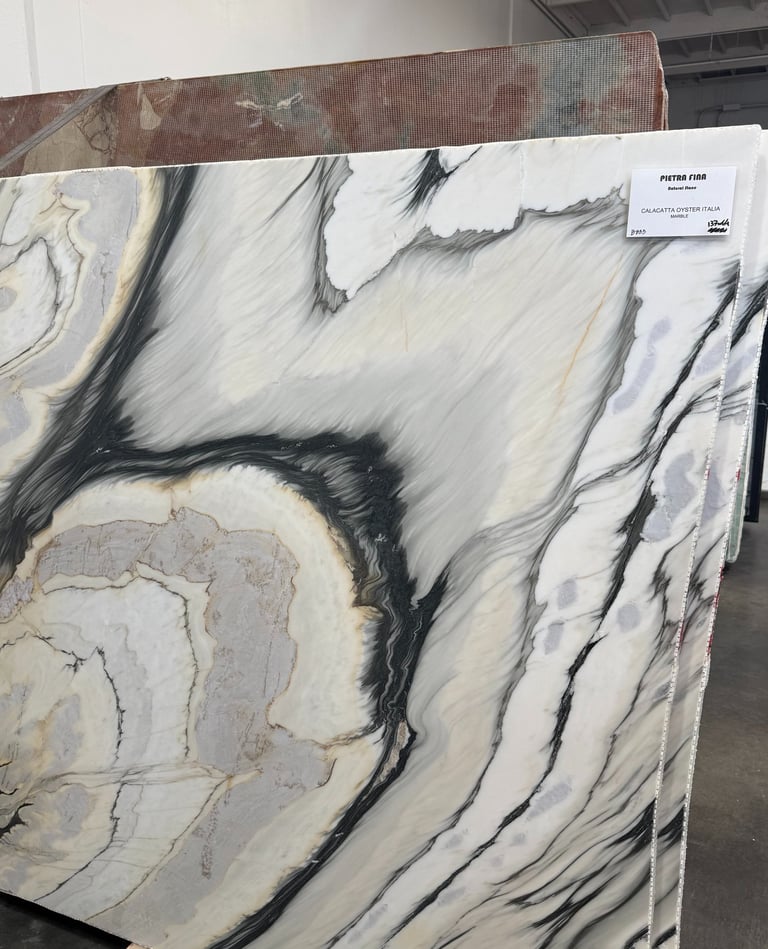
I am drawn to materials that reveal how they were made and become more interesting as they age.
Hand-troweled plaster carries the trace of the hand that applied it. Unlacquered bronze darkens where it is touched. Natural stone contains variation that no manufactured surface can convincingly reproduce.
Those qualities aren't imperfections to eliminate.
They are evidence of material, process and time.

Collected, not compiled.
Rooms lose something when everything appears to have arrived on the same truck.
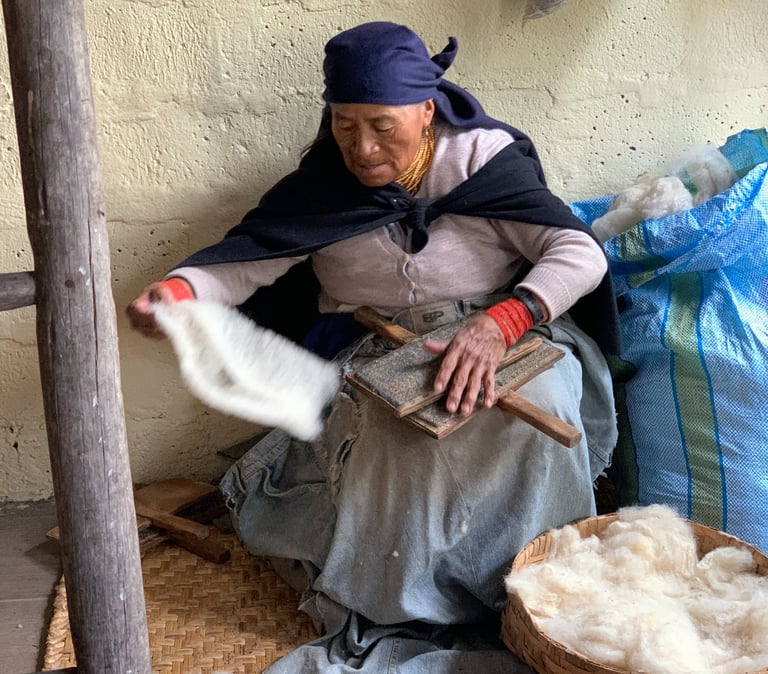
I source broadly and without allegiance to a single period, brand or price point—looking to vintage dealers, independent makers, galleries, showrooms, architectural salvage, artisans and unexpected sources.
The question isn't whether two objects “match.”
It's whether they have something interesting to say to each other.
Over time, those individual choices create a room that feels layered, personal and difficult to replicate.


The idea is only half the job.
A beautiful specification badly executed is still a bad result.
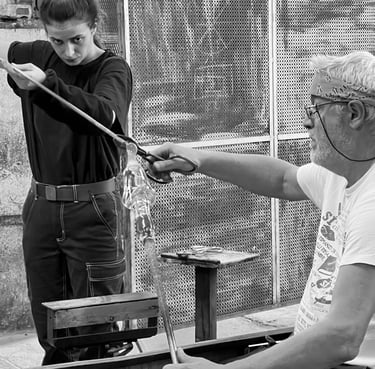
Materials behave differently. Wallpaper needs the right installer. Complicated stone requires the right fabricator. Upholstery depends on what lies beneath the fabric as much as the fabric itself.
When specialist knowledge is required, I believe in bringing the right craftsperson or technical expert into the conversation. This is why I guide you through the decision-making process and help you to navigate the trade-offs—deciding what, why, and whether to invest in high-quality pieces and finishes, and when a simpler solution suffices. The result is a space where every element is intentionally selected, expertly crafted, and financially sound.
I don't expect one person to know everything.
I do expect the right question to be asked before an expensive mistake is made.